Meta Deepens Renewable Infrastructure Commitment with New South Carolina Solar Investment

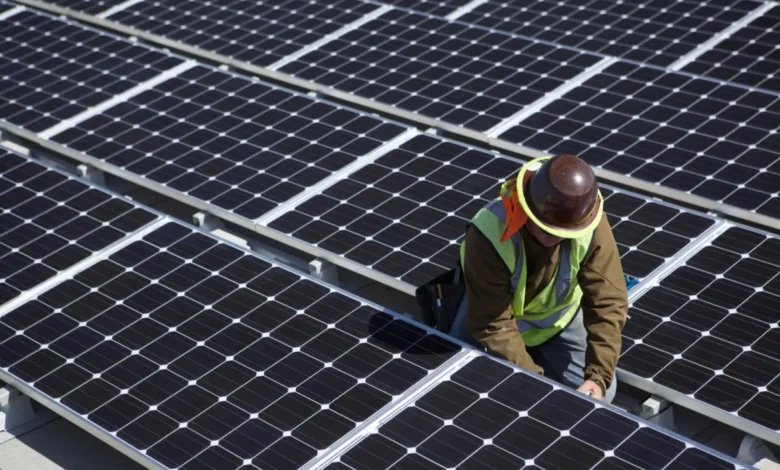
Meta has officially entered into a definitive agreement with solar developer Silicon Ranch to construct a 100-megawatt solar farm in South Carolina, a $100 million project designed to provide clean energy for the tech giant’s upcoming $800 million artificial intelligence data center. This partnership marks the 18th collaboration between the two companies, signaling a deepening of Meta’s aggressive infrastructure strategy as it seeks to scale its AI capabilities while adhering to stringent sustainability mandates. Both the new solar installation and the associated data center are scheduled to reach operational status by 2027, representing a critical milestone in Meta’s long-term energy procurement roadmap.
The Strategic Shift Toward Hyperscale Sustainability
The investment in South Carolina is reflective of a broader trend among "hyperscalers"—large-scale cloud and AI infrastructure providers such as Microsoft, Google, and Amazon—to secure dedicated, reliable, and cost-effective renewable energy sources. As artificial intelligence models become increasingly compute-intensive, the power demand for data centers has skyrocketed. By moving beyond traditional carbon-offset programs and directly funding the construction of new renewable assets, Meta is effectively insulating its operations against grid volatility and rising energy costs.
This project is particularly notable for its domestic focus; both Meta and Silicon Ranch have confirmed that a substantial portion of the solar hardware, including panels and racking systems, will be manufactured within the United States. This aligns with federal incentives provided by the Inflation Reduction Act (IRA), which offers tax credits for renewable energy projects that utilize domestically sourced materials, thereby bolstering the local supply chain while advancing the company’s climate goals.
A Chronology of Rapid Expansion
Meta’s push into renewable energy has accelerated significantly throughout 2025. The company’s strategy has evolved from intermittent power purchasing agreements (PPAs) to large-scale, multi-gigawatt infrastructure commitments. The timeline of Meta’s recent activity demonstrates this rapid scaling:
- January 2025: Meta announced a 200-megawatt solar project in Texas in collaboration with Engie, followed shortly by a project with Zelestra to further boost capacity in the state.
- May 2025: A significant agreement was reached with AES to develop 650 megawatts of solar capacity spanning Kansas and Texas.
- June 2025: Meta expanded its footprint in the Midwest by signing a deal with Invenergy for several major projects in Ohio, representing over 1 gigawatt of new renewable capacity.
- August 2025: The South Carolina agreement with Silicon Ranch was finalized, focusing on 100 megawatts of dedicated solar power for the regional data center expansion.
Cumulatively, Meta has added over 2 gigawatts of solar capacity in 2025 alone, a testament to the urgency with which the company is preparing its grid infrastructure for the next generation of AI-driven compute tasks.
Economic and Environmental Impact
The partnership between Meta and Silicon Ranch has been a consistent driver of regional economic development. According to Silicon Ranch, the 18 projects completed or currently in development with Meta have catalyzed more than $2.5 billion in capital investment across various states. These projects do more than just provide electricity; they create construction and maintenance jobs, generate tax revenue for rural communities, and stimulate the local manufacturing sector.
From an environmental perspective, the strategy is twofold. First, the primary objective is to maintain Meta’s net-zero carbon emissions pledge across its global operations. By ensuring that every watt of energy consumed by its new data centers is matched by renewable generation, the company mitigates the carbon footprint of its AI training clusters. Second, the reliance on solar is a pragmatic business decision. Solar energy has become one of the most cost-competitive forms of electricity in the United States. When deployed at scale, it provides a hedge against the price fluctuations inherent in traditional wholesale electricity markets.
The Challenge of Time-to-Power
One of the most significant bottlenecks in the current AI boom is "time-to-power." Data centers require massive, reliable, and immediate access to the power grid. Traditional utility interconnection queues can take years to clear, often delaying the launch of new infrastructure. By partnering with experienced developers like Silicon Ranch, Meta is often able to navigate these regulatory and infrastructure hurdles more effectively.
The ability to deploy solar installations in tandem with data center construction allows Meta to bypass some of the systemic delays associated with grid upgrades. However, this strategy is not without its challenges. Intermittency remains a factor, requiring sophisticated energy management software and, in some cases, battery energy storage systems (BESS) to ensure that the data center remains operational during non-daylight hours. While the current announcement focuses on solar generation, industry analysts expect that future agreements will increasingly incorporate long-duration energy storage to provide the 24/7 reliability required by mission-critical AI workloads.
Market Implications and Future Outlook
The $100 million investment in South Carolina is a microcosm of a larger industrial transition. As the technology sector becomes the primary driver of new load growth on the U.S. power grid, the influence of companies like Meta over energy policy and infrastructure development is expected to grow.
"We are seeing a fundamental shift in how corporations interact with the grid," says a spokesperson familiar with the renewable sector. "It is no longer enough to just purchase certificates; these companies are now becoming the architects of the new energy economy."
For Silicon Ranch, the partnership with Meta provides a reliable anchor tenant, allowing the firm to secure financing and scale its own operations. For Meta, the deal provides the energy security necessary to continue its aggressive deployment of AI hardware without compromising its sustainability commitments.
As the 2027 operational deadline approaches, industry observers will be watching to see how the grid manages the integration of these new resources. The success of the South Carolina project will likely serve as a blueprint for future developments, particularly as Meta continues to seek out regions with available land, supportive regulatory environments, and favorable solar irradiance.
Analysis of the Competitive Landscape
Meta is not acting in isolation. Google, Amazon, and Microsoft have all made similar multi-billion dollar commitments to renewable energy, often competing for the same utility-scale projects and land access. This competition has led to a surge in demand for land, labor, and materials, which in turn has pushed the cost of renewable development higher in some regions.
Despite these inflationary pressures, the fundamental economic argument for solar power remains strong. As utility companies struggle to modernize aging grids, the private investment provided by Meta and its peers acts as a catalyst for infrastructure improvements that benefit the broader community. The "time-to-power" advantage remains the decisive factor; companies that can successfully pair renewable development with data center construction will be the ones that dominate the competitive landscape of the AI era.
In conclusion, the Meta-Silicon Ranch deal represents a maturation of the relationship between big tech and the energy sector. By integrating supply chain localization with renewable capacity expansion, Meta is not only securing its own energy future but is also playing an active role in the decarbonization of the American industrial base. As the company continues to scale its AI ambitions, the strategic importance of these investments will only grow, setting the stage for a new chapter in the intersection of climate action and technological innovation.
Related posts: